


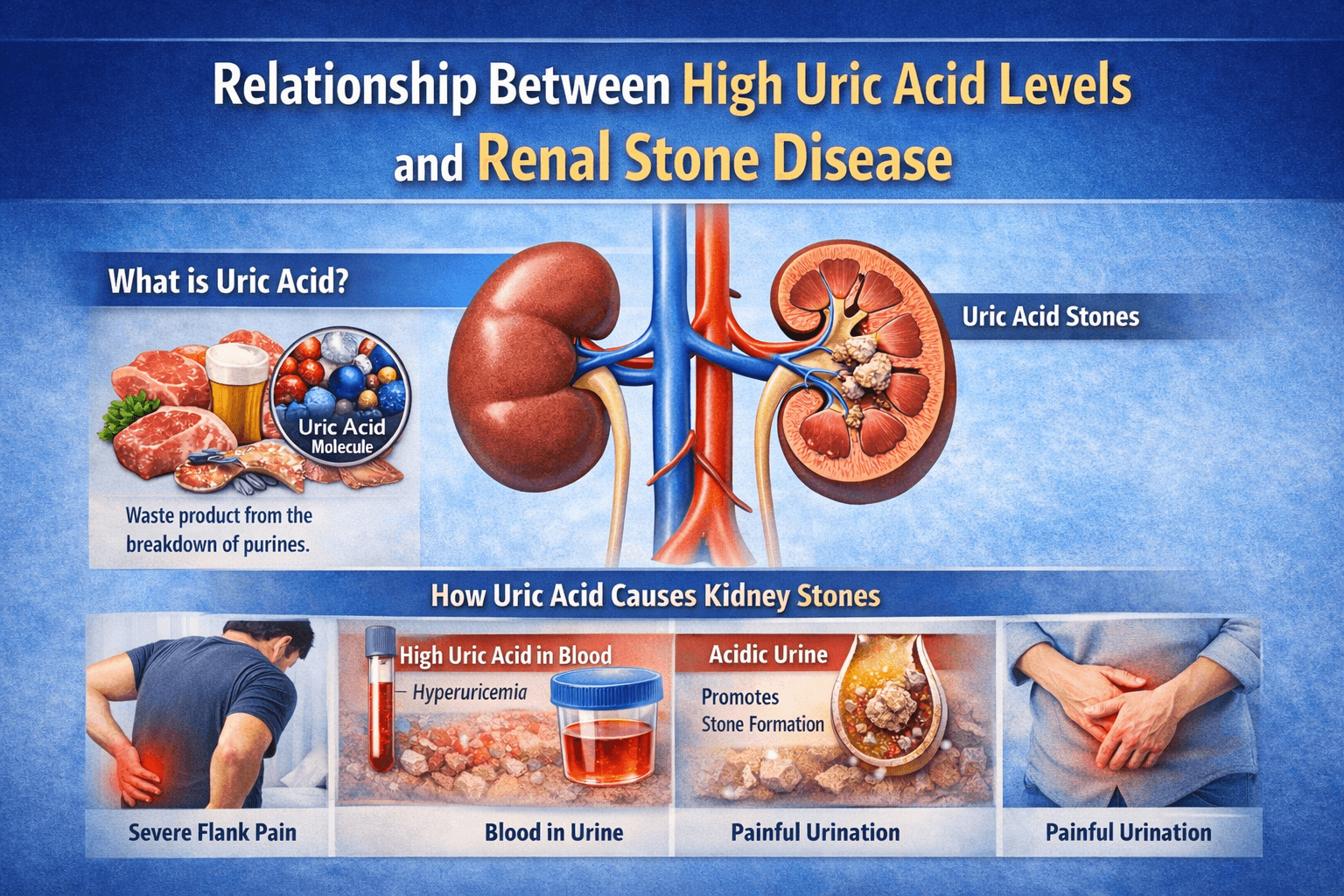
Kidney stones affect millions of people worldwide, causing excruciating pain and potentially serious health complications. While many factors contribute to kidney stone formation, elevated uric acid levels play a particularly significant role in this painful condition. Understanding the connection between high uric acid and renal stone disease can help you take preventive measures and seek appropriate treatment. Kidney stones are one of the most common and painful urological disorders, affecting nearly 1 in 10 people at some point in their lives. While most are familiar with calcium-based stones, a significant number are caused by a less-discussed culprit: high uric acid levels. This silent metabolic imbalance can quietly set the stage for painful renal stone disease, often without obvious warning signs. Understanding the connection between hyperuricemia (high uric acid) and kidney stones is crucial for prevention, early detection, and effective management.
Understanding Uric Acid and Its Role in the Body
Uric acid is a natural waste product formed when your body breaks down purines—chemical compounds found in certain foods and produced naturally by your cells. Under normal circumstances, uric acid dissolves in your blood, passes through your kidneys, and exits your body through urine. However, when uric acid levels become elevated, a condition known as hyperuricemia, various health problems can develop, including kidney stones.
Your kidneys serve as the body’s primary filtration system, removing excess uric acid and other waste products. When this delicate balance is disrupted, uric acid can crystallize and form stones in the urinary tract, leading to what medical professionals call uric acid nephrolithiasis.
How High Uric Acid Levels Lead to Kidney Stone Formation
The relationship between elevated uric acid and kidney stone disease involves several interconnected mechanisms. When uric acid concentrations in urine become too high, or when urine becomes too acidic, uric acid crystals begin to form. These microscopic crystals can gradually accumulate and bind together, eventually forming larger stones that can obstruct the urinary tract.
The path from high serum uric acid to a painful kidney stone involves several physiological factors:
- Oversaturation: When the concentration of uric acid in urine exceeds its solubility limit, crystals begin to form. This can happen from excessive production, inadequate excretion, or both.
- Low Urine pH (Acidic Urine): Uric acid solubility is highly dependent on urine pH. In acidic urine (pH below 5.5), uric acid exists in its insoluble, non-ionized form, promoting crystallization. At a higher, more alkaline pH (above 6.5), it ionizes into soluble urate, which is easily excreted. Many individuals with uric acid stones have chronically acidic urine.
- Hyperuricosuria: This condition refers to excessive excretion of uric acid in the urine (>750 mg/day for women, >800 mg/day for men), directly increasing the risk of crystal formation, even if blood levels are normal.
- Dehydration: Concentrated urine from low fluid intake raises the concentration of all stone-forming substances, including uric acid, accelerating crystal formation.
Types of Kidney Stones Associated with High Uric Acid
While there are four main types of kidney stones, high uric acid levels are primarily associated with two categories:
Pure Uric Acid Stones: These stones consist entirely of uric acid crystals and account for approximately 5-10% of all kidney stones. They’re unique because they cannot be detected on standard X-rays, requiring ultrasound or CT scans for diagnosis. Pure uric acid stones are more common in people with gout, those who consume high-protein diets, and individuals with chronic diarrhea or inflammatory bowel disease.
Mixed Stones: High uric acid levels can also contribute to calcium oxalate stone formation, the most common type of kidney stone. Elevated uric acid can promote calcium oxalate crystallization, even when calcium levels are normal. This explains why people with hyperuricemia often develop mixed composition stones containing both uric acid and calcium oxalate crystals.
Risk Factors for High Uric Acid and Kidney Stones
Several overlapping risk factors increase your likelihood of developing both elevated uric acid levels and kidney stones:
Dietary Factors: Consuming excessive amounts of purine-rich foods like red meat, organ meats, shellfish, and certain fish significantly raises uric acid production. High-fructose corn syrup, found in many sweetened beverages and processed foods, has also been linked to increased uric acid levels. Alcohol consumption, particularly beer, can interfere with uric acid excretion and increase stone risk.
Medical Conditions: Gout, a painful inflammatory arthritis caused by uric acid crystal deposits in joints, strongly correlates with kidney stone formation. People with gout are nearly twice as likely to develop kidney stones compared to the general population. Metabolic syndrome, diabetes, obesity, and chronic kidney disease all increase both uric acid levels and stone risk.
Medications: Certain medications can elevate uric acid levels or affect urinary pH. Diuretics, commonly prescribed for high blood pressure, can concentrate urine and increase stone risk. Low-dose aspirin, immunosuppressants, and some chemotherapy drugs may also impact uric acid metabolism.
Lifestyle Factors: Chronic dehydration is one of the most significant modifiable risk factors for kidney stones. When you don’t drink enough fluids, your urine becomes concentrated, allowing minerals and salts to crystallize more easily. Low physical activity levels and excess body weight also contribute to metabolic changes that promote stone formation.
Symptoms and Complications of Uric Acid Kidney Stones
Kidney stones often remain asymptomatic until they begin moving through the urinary tract. When symptoms do occur, they can be severe and debilitating. The classic presentation includes intense, sharp pain in the back or side below the ribs, often radiating to the lower abdomen and groin. This pain, known as renal colic, typically comes in waves and can be accompanied by nausea and vomiting.
Other common symptoms include blood in the urine (hematuria), cloudy or foul-smelling urine, frequent urination, and a persistent urge to urinate. Some people experience fever and chills if a stone causes urinary tract infection. Burning sensations during urination may indicate the stone is passing through the lower urinary tract.
If left untreated, kidney stones can lead to serious complications. Chronic obstruction can damage kidney tissue and impair kidney function. Recurrent stones may eventually lead to chronic kidney disease. Stones can also cause urinary tract infections, which in severe cases may progress to sepsis, a life-threatening condition requiring immediate medical attention.
Diagnosis and Testing
Diagnosing uric acid-related kidney stones involves several approaches. Your healthcare provider will begin with a detailed medical history and physical examination. Blood tests measure uric acid levels, kidney function markers, and electrolyte balance. Urinalysis can detect blood, crystals, and signs of infection, while a 24-hour urine collection provides comprehensive information about stone-forming risk factors.
Imaging studies are essential for confirming stone presence and location. CT scans are the gold standard for kidney stone diagnosis, detecting stones of all compositions. Ultrasound offers a radiation-free alternative, particularly useful for pregnant women and children. Since uric acid stones are radiolucent (invisible on standard X-rays), these advanced imaging techniques are crucial for accurate diagnosis.
Prevention Strategies for High Uric Acid and Kidney Stones
Preventing uric acid kidney stones focuses on modifying risk factors and maintaining healthy metabolic balance:
Hydration: Drinking adequate fluids is the single most important preventive measure. Aim for at least 2-3 liters of water daily, enough to produce pale yellow, dilute urine. Increased fluid intake helps flush the urinary system and prevents crystal formation.
Dietary Modifications: Limit purine-rich foods including red meat, organ meats, shellfish, anchovies, and sardines. Reduce consumption of high-fructose corn syrup and sugary beverages. Moderate alcohol intake, especially beer. Increase intake of fruits and vegetables, which help alkalize urine and reduce stone risk.
Weight Management: Maintaining a healthy body weight through balanced nutrition and regular physical activity improves overall metabolic health and reduces stone formation risk.
Urinary Alkalinization: Since uric acid stones form in acidic urine, increasing urinary pH can prevent stone formation and even dissolve existing stones. This can be achieved through dietary changes, consuming citrus fruits, or taking prescribed alkalinizing agents like potassium citrate.
Treatment Options
Treatment for uric acid kidney stones depends on stone size, location, and symptoms. Small stones (less than 5mm) often pass spontaneously with increased hydration, pain management, and medical therapy. Larger stones may require intervention.
Medical therapy with alkalinizing agents can effectively dissolve pure uric acid stones, a unique advantage over other stone types. Potassium citrate or sodium bicarbonate raises urinary pH, making uric acid more soluble. This approach can eliminate stones over weeks to months without invasive procedures.
When stones are too large to pass or cause severe symptoms, several procedures are available. Extracorporeal shock wave lithotripsy (ESWL) uses sound waves to break stones into smaller fragments. Ureteroscopy involves passing a small scope through the urethra to remove or fragment stones. For very large stones, percutaneous nephrolithotomy may be necessary, involving a small incision in the back to access and remove stones directly.
Complications If Left Untreated
Untreated renal stone disease may lead to:
- Recurrent urinary tract infections
- Kidney obstruction
- Hydronephrosis
- Chronic kidney disease
- Permanent kidney damage
Early detection and treatment significantly reduce these risks.
The connection between high uric acid levels and kidney stone disease represents a significant health concern affecting millions globally. Understanding this relationship empowers you to take proactive steps toward prevention. By maintaining adequate hydration, following a balanced diet low in purines, managing underlying medical conditions, and working closely with healthcare providers, you can significantly reduce your risk of developing painful kidney stones.
If you experience symptoms of kidney stones or have elevated uric acid levels, consult a healthcare professional promptly. Early intervention can prevent complications and improve long-term outcomes. Remember, kidney stone disease is often preventable through lifestyle modifications and appropriate medical management. Taking action today can protect your kidney health for years to come.
If you are in Multan and seeking expert care for kidney stones, high uric acid, or any urological concern, consulting a specialist is the most important step. Dr. Abdul Ghaffar is widely regarded as one of the best urologists in Multan, known for his expertise, advanced diagnostic approach, and professional treatment plans. His practice offers comprehensive management for renal stone disease, from non-invasive dissolution therapies to the latest surgical interventions, ensuring patients receive personalized and effective care.